
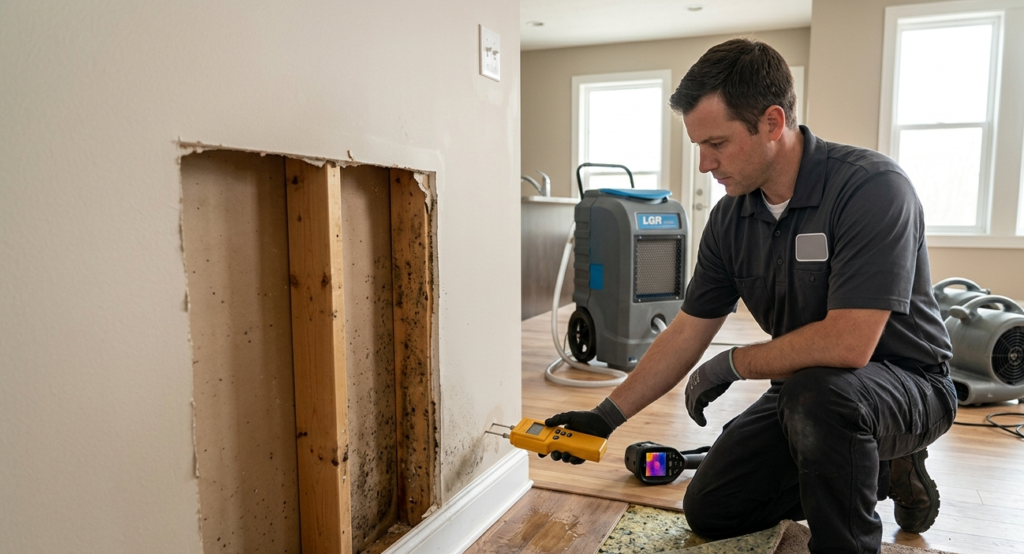
Water damage is a double threat. The immediate destruction to your floors, walls, and belongings is obvious – but the invisible danger that follows can be far more damaging to your health and home. Mold can begin colonizing wet surfaces within 24 to 48 hours of a water intrusion event. Understanding how and why mold grows is the first step to stopping it.
How Mold Begins Growing After Water Damage
Mold is a naturally occurring fungus that exists as spores in virtually every indoor and outdoor environment. Under normal dry conditions, these spores remain dormant and harmless. The moment moisture is introduced – through a burst pipe, flooding, roof leak, or sewage backup – those spores spring to life with alarming speed.
Mold doesn’t need much. It needs a food source (any organic material – drywall, wood, fabric, paper), oxygen, and moisture. When water damage occurs, all three conditions are instantly satisfied. Temperature between 60°F and 80°F accelerates growth further, which covers most homes year-round.
The 48-Hour Window Is Critical
According to water damage restoration experts, you have roughly 24–48 hours after a water event before mold colonization begins. After 72 hours, mold growth can become widespread and remediation significantly more complex and costly.
The Mold Growth Timeline
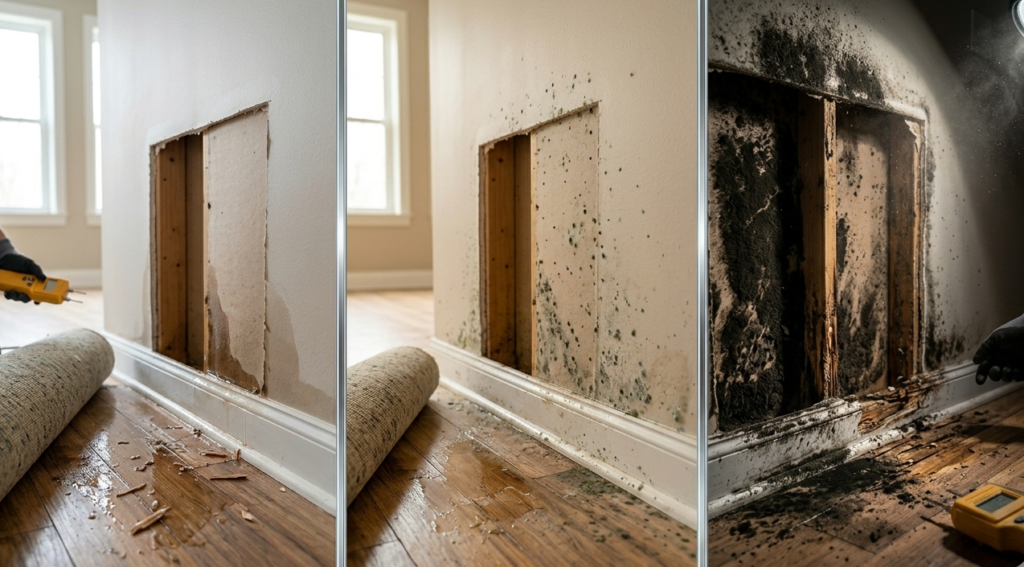
Here’s what typically happens after a water damage event if left unaddressed:
0 – 24 Hours
Spore Activation
Dormant mold spores absorb moisture and begin to germinate. No visible growth yet, but the biological process has started. Wet drywall, insulation, and carpet padding are already at risk.
24 – 48 Hours
Hyphal Growth Begins
Mold threads (hyphae) begin penetrating surfaces. You may notice a musty odor before any visible signs appear. Structural materials start sustaining damage at the microscopic level.
3 – 7 Days
Visible Colonies Appear
Black, green, gray, or white fuzzy patches become visible on walls, ceilings, and floors. The musty smell intensifies. HVAC systems can begin circulating spores throughout the home.
1 – 3 Weeks
Widespread Contamination
Mold penetrates deep into porous materials. Structural integrity of drywall and wood framing may be compromised. Health effects become increasingly likely for occupants.
1 Month+
Severe Structural Damage
Extensive remediation required. Framing, subfloors, and HVAC may need replacement. Professional mold testing and air quality assessment is essential before re-occupancy.Related ServiceOur Emergency Water Damage Restoration Process – What Happens When We Arrive →
Conditions That Accelerate Mold Growth
Not all water damage situations carry equal mold risk. Several environmental factors determine how quickly mold establishes itself and how far it spreads. Understanding these helps you prioritize your response.
High Humidity
Relative humidity above 60% sustains mold growth even without standing water. Flood-affected areas often trap humidity for days after water is removed.
Warm Temperatures
Mold thrives between 60–80°F. Summer flooding events combine heat and moisture – the most dangerous conditions for rapid mold spread.
Porous Materials
Drywall, insulation, carpet, wood, and fabric absorb water deeply. Even after surface drying, moisture trapped inside feeds mold growth for weeks.
Contaminated Water
Category 3 (black water) flooding from sewage brings additional bacteria and mold strains. Affected materials are presumed contaminated and often require disposal.EPA.GOV EPA Mold Course: Understanding Mold – U.S. Environmental Protection AgencyThe U.S. EPA’s official mold guidance covers health effects, building assessment standards, and remediation guidelines used by professional restorers nationwide. Recommended reading for homeowners dealing with significant water events.
Health Risks of Mold Exposure
Mold is more than a cosmetic problem. Prolonged exposure to indoor mold, especially in enclosed spaces after water damage, poses real health risks – particularly for vulnerable individuals including children, the elderly, and those with respiratory conditions or compromised immune systems.
- Persistent coughing, sneezing, and nasal congestion
- Eye, throat, and skin irritation
- Worsening asthma and allergy symptoms
- Headaches and fatigue (often dismissed as unrelated)
- Mycotoxin exposure from black mold (Stachybotrys)
- Respiratory infections in immunocompromised individuals
Black Mold (Stachybotrys chartarum) – Know the Risk
Often appearing as slimy greenish-black patches, Stachybotrys thrives in areas with chronic moisture exposure – like water-damaged drywall and ceiling tiles. While it grows more slowly than other species, its mycotoxins are among the most harmful. Always treat dark mold as a serious health hazard and avoid disturbing it without proper protection.
Related GuideFlood Damage Cleanup: A Step-by-Step Homeowner’s GuideWhat to do in the first hours after flooding Insurance HelpFiling a Water Damage Insurance Claim: What You Need to KnowDocument damage properly for maximum coverage
How to Prevent Mold After Water Damage
Prevention is far less expensive and stressful than remediation. The following steps, taken immediately after a water damage event, are proven to dramatically reduce mold risk. Speed is the most important factor – every hour counts.
1 Stop the Water Source Immediately
Before anything else, stop ongoing water intrusion. Shut off the main water supply for pipe failures, call emergency services for natural flooding, or patch temporary roof leaks with tarps. A running source negates any drying effort.
2 Remove Standing Water Within Hours
Use wet/dry vacuums, mops, and towels for small amounts. For significant flooding, professional water extraction equipment can remove hundreds of gallons per hour. Don’t let water sit overnight if avoidable.
3 Maximize Airflow and Dehumidification
Open windows and doors, run fans pointing outward to exhaust humid air, and deploy commercial-grade dehumidifiers. Target indoor relative humidity below 50%. Rental dehumidifiers from hardware stores are adequate for small areas; larger events require professional equipment capable of removing 150+ pints per day.
4 Remove and Discard Unsalvageable Materials
Soaked drywall, insulation, carpet padding, and particleboard rarely dry thoroughly before mold begins. Removing these materials within 24–48 hours – even if it feels extreme – is almost always the correct decision. Structural materials like framing can often be dried if addressed quickly.
5 Apply Antimicrobial Treatments
After drying, treat exposed framing, subfloors, and concrete with EPA-registered antimicrobial solutions. This does not substitute for proper drying but provides an additional layer of protection. Borate-based treatments are common for wood framing. Avoid bleach on porous surfaces – it does not penetrate to kill mold roots.
6 Monitor with Moisture Meters
Professional restorers use calibrated moisture meters to confirm that structural materials have reached safe drying targets (typically below 16% moisture content in wood). Visual drying is not sufficient – materials may appear dry while harboring dangerous moisture levels inside.
Pro Tip: What Professional Restorers Do Differently
Licensed water damage restoration companies follow the IICRC S500 Standard – the industry benchmark for water damage mitigation. Key differences from DIY approaches include thermal imaging cameras to detect hidden moisture pockets behind walls, commercial drying equipment running 24/7, and daily moisture readings to confirm drying progress before reconstruction begins.Local Expert – Little Rock, ARProfessional Mold Remediation & Water Damage Services in Little Rock, Arkansas →
When to Call a Professional vs. DIY
Not every water damage situation requires professional intervention. Small, contained incidents – a minor appliance leak caught within hours, a small bathroom overflow – may be manageable with thorough DIY drying. However, several scenarios demand professional assessment regardless of visible damage extent.
- Flooding affecting more than 10 square feet
- Water contaminated with sewage (Category 3)
- Moisture inside walls, under flooring, or in HVAC systems
- Visible mold growth of any size before full drying
- Anyone in the home with asthma, allergies, or immune conditions
- Water damage in the same area recurring multiple times
Long-Term Mold Prevention Strategies
After remediation is complete and reconstruction begins, building back with mold resistance in mind is a worthwhile investment. Several products and strategies significantly reduce future vulnerability.
Moisture-Resistant Building Materials
Standard drywall is one of the most mold-susceptible materials in a home. When replacing water-damaged drywall, consider cement board in bathrooms and kitchens, and paperless fiberglass-mat drywall (such as DensArmor® or equivalent) in basements and other moisture-prone areas. These products eliminate the paper facing that mold uses as a food source.
Improve Home Ventilation
Chronic moisture problems in bathrooms, kitchens, and crawl spaces are frequently the result of inadequate ventilation. Ensure bathroom exhaust fans are rated for room size, vent directly outdoors (not into the attic), and run for at least 20 minutes after shower use. Crawl spaces should have cross-ventilation or a sealed vapor barrier system.
Maintain Your Plumbing Proactively
Most non-storm water damage originates from plumbing failures – supply line breaks, toilet overflows, water heater failures, and appliance leaks. Annual inspection of washing machine hoses, water heater anode rods, and under-sink supply lines can prevent the majority of these events. Water leak detection devices with automatic shutoff valves are among the highest-ROI home safety investments available.
The Best Mold Prevention Is a Fast Response
No building material, coating, or long-term strategy replaces the importance of rapid response after a water event. If you experience significant water intrusion at any hour, call a certified water damage restoration company immediately. Most reputable companies offer 24/7 emergency response with arrival within 1–2 hours. The cost difference between a claim handled in the first 24 hours versus 72 hours can be tens of thousands of dollars.🚨 24/7 Emergency Service – Little Rock, AREmergency Water Damage Response in Little Rock – Call Now for Immediate Help →
Frequently Asked Questions
Can mold grow inside walls without visible signs?
Yes – in fact, hidden mold inside wall cavities is extremely common after water damage events. Moisture that penetrates drywall reaches the paper backing, insulation, and wood framing behind, where mold can grow extensively with no visible exterior signs. A persistent musty odor without visible mold is a strong indicator of hidden growth. Professional assessment using thermal imaging and invasive moisture testing is required to confirm. Learn more about hidden mold detection on our site. How do I know if mold from water damage is dangerous?
All mold in a water-damaged home should be treated with caution, but certain species – particularly Stachybotrys chartarum (black mold) and Aspergillus – pose greater health risks. Professional mold testing can identify species present, but even “less dangerous” species can cause significant health effects with prolonged exposure. The CDC’s mold FAQ page provides detailed health guidance. Does bleach kill mold after water damage?
Bleach can kill surface mold on non-porous materials like tile and glass. However, it does not penetrate porous materials like drywall or wood, meaning the roots (hyphae) survive while the surface appears clean. The EPA and IICRC recommend against bleach as a primary remediation agent for most water-damaged building materials. Proper remediation involves removing and replacing affected porous materials rather than treating in place. Will homeowner’s insurance cover mold from water damage?
Coverage depends on the cause and your specific policy. Sudden and accidental water damage – a burst pipe, for instance – is typically covered. Gradual leaks, flooding from outside (which requires separate flood insurance), and neglect are generally excluded. Many policies also have specific mold coverage sub-limits separate from the main dwelling coverage. Review our guide on navigating water damage insurance claims for more details. How long does mold remediation take?
Scope determines timeline. Small localized mold issues (under 10 square feet, single room) can often be remediated in 1–3 days. Whole-floor or multi-room contamination following major flooding may require 1–2 weeks of active remediation plus additional drying and reconstruction time. Severely affected homes may require temporary relocation. Little Rock AR Water Damage provides free on-site assessments with detailed project timelines before any work begins.
Don’t wait – every hour increases mold risk. Our certified team is available 24/7. Call now (214) 894-2595 for immediate help.
Leave a Reply